Cart 0




What Is an API System? A Plain-English Guide for Business Owners
An API system lets different software applications talk to each other automatically. Here is what
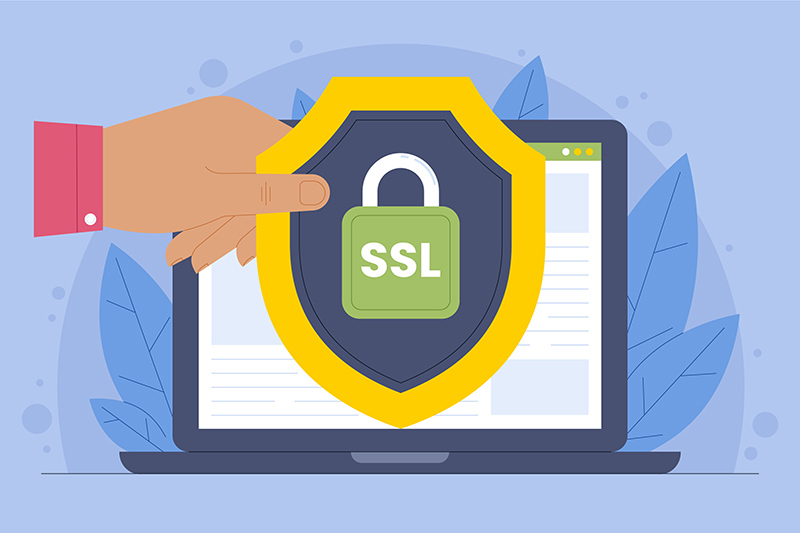
An SSL certificate is a digital certificate responsible for securing connections between websites and their users. SSL is an acronym for Secure Sockets Layer, which provides security services for information transmitted between users’ web browsers and websites by means of encryption. In case a website uses an SSL certificate, it usually starts with HTTPS rather than HTTP in its web address.
SSLCs are an essential component of website security in the modern world. SSL Certificates play an important role in protecting sensitive data such as passwords, email IDs, payment methods, etc., that are shared through websites. SSL Certificate is also compulsory for companies as well because they have to build their customers’ trust in a safe environment.

Whenever a visitor opens a website that uses SSL encryption, there is the creation of an encrypted link between the browser and web server. This is often known as the SSL handshake.
In this process, the SSL certificate of the particular site is delivered to the browser. The SSL certificate helps in the identification and authentication of the website, as well as in creating the encrypted link.
After the establishment of the secure connection, any information that passes between the visitor and the site will be encrypted. This ensures that anyone else trying to capture the data will have a hard time understanding it.
This is one reason website security should be considered alongside other technical website requirements. Firms interested in enhancing their web presence could also consider Triforce’s website design services and website development services while creating or upgrading their websites.
The major distinction between HTTP and HTTPS is security.
HTTP stands for Hypertext Transfer Protocol. The purpose of HTTP is for the browser and server to be able to exchange data. Data that is being exchanged over an HTTP connection is not encrypted like it is on an HTTPS connection.
HTTPS, which stands for Hypertext Transfer Protocol Secure, is a type of protocol that is encrypted.
Modern websites should generally use HTTPS rather than HTTP. In addition to security benefits, HTTPS has become a standard expectation for visitors. Browsers may also display warnings when users attempt to access certain websites that do not use secure connections.
SSL certificates provide several important benefits for websites and businesses.
One of the biggest reasons to use an SSL certificate is to protect information transmitted through a website.
This can include:
Encryption helps prevent unauthorized parties from easily reading information while it is being transmitted.
Users tend to feel a higher level of trust towards websites that use HTTPS and have a secured connection through their web browser.
If a website presents users with messages about its non-secure status, it may make them nervous, especially when asked to provide any personal data or make a payment.
Thus, SSL certificates not only secure websites technically but also improve user experience.
SSL is not an alternative to a complete SEO process; however, switching to HTTPS is already a proven component of a good website.
There are many things taken into account by search engines when they analyze websites, and website security is among the technical factors. Properly implementing HTTPS on your website will also require technical knowledge so that search engines can understand it properly.
Businesses interested in improving organic search visibility can learn more about Triforce’s search engine optimization services.
SEO involves much more than installing an SSL certificate. Technical SEO, content, links, website structure, page experience, and search intent all play important roles. However, having a secure website is an important foundation.
Encryption plays a role in ensuring website traffic is protected from some kinds of interception and unauthorized access.
An example is a man-in-the-middle attack whereby the attacker aims at intercepting communication between two parties. HTTPS ensures that the communication is secure, as the data is encrypted when sent between the browser and the server.
The SSL does not provide immunity to hacking. Website administrators will still need to solve other website security problems such as software weaknesses, weak passwords, outdated plug-ins, hijacked accounts, and even server security.
SSL should thus be seen as part of the website security strategy.
SSL certificates can be categorized in several ways, including the number of domains they protect and the level of validation involved.
Domain Validation (DV) certificates are commonly used for websites where basic domain validation is sufficient.
The certificate authority verifies that the requester has control over the domain. DV certificates can be appropriate for many small business websites, blogs, informational websites, and other sites that need HTTPS without more extensive organizational validation.
Organization Validation (OV) certificates involve additional validation of the organization associated with the website.
These certificates may be used by businesses and organizations that want additional identity information associated with their certificate.
Extended Validation (EV) certificates involve a more extensive validation process.
EV certificates were historically associated with more prominent browser indicators, although modern browsers have changed how certificate validation information is displayed to users.
The appropriate certificate depends on the website’s requirements, organization, and security needs.
Mixed content occurs when an HTTPS webpage attempts to load certain resources through HTTP.
For example, a website might correctly load through:
https://example.com
but attempt to load an image through:
http://example.com/image.jpg
This creates a security issue because the page is secure while some of its resources are being requested through an insecure connection.
Mixed content may also result in browser warnings or block some resources.
For migrating websites to HTTPS, the owners must verify all internal links, images, scripts, style sheets, and other resources to ensure that secure URLs are used when needed.
A technical website audit can help identify issues associated with a website’s configuration. Triforce also provides online presence analysis and audit services for businesses looking to identify opportunities and problems affecting their online presence.
No.
This is an important distinction. An SSL certificate helps secure data in transit, but it does not guarantee that the website itself is completely secure.
For example, SSL does not automatically protect a website against:
There should be a greater security plan for websites.
For WordPress sites, the update of WordPress, themes, and plugins becomes crucial. Also, regular maintenance might help find some vulnerabilities. Businesses using WordPress can explore Triforce’s WordPress care services for website maintenance and support.
HTTPS itself is not generally considered a reason to avoid securing a website. Modern web infrastructure is designed to support encrypted connections efficiently.
In many cases, properly configured HTTPS works seamlessly without visitors noticing a meaningful performance difference.
Website speed depends on many other factors, including:
SSL should therefore be considered a standard component of a modern website rather than something that businesses should avoid because of performance concerns.
SSL certificates are generally obtained through a certificate authority, hosting provider, or other website infrastructure provider.
Many hosting providers offer SSL certificates as part of their hosting packages. Some also provide automated certificate installation and renewal.
The basic process typically involves:
The exact process depends on the website’s hosting environment and technical setup.
If your business is looking for website infrastructure support, Triforce also offers hosting services.
Certificates provided by SSL will always have an expiration period. If it expires, then it might not be renewed, thus causing browser warnings whenever users visit that particular site.
Expired certificates will not allow visitors to feel safe using the website.
Automated renewal has made certificate management easier for many websites, but website owners should still make sure their certificates are being renewed correctly.
Businesses should also monitor their domains and hosting environment as part of regular website maintenance. Triforce provides domain services that can help businesses manage important aspects of their domain presence.
Installing an SSL certificate is not enough to improve a website’s search visibility by itself.
After moving a website from HTTP to HTTPS, the migration should be handled carefully. Website owners should verify that:
These technical details are particularly important for established websites that already have organic traffic and backlinks.
A poorly managed HTTPS migration can create unnecessary technical SEO problems. For businesses that want to identify technical issues and opportunities, requesting a free SEO analysis from Triforce can be a useful starting point.
Well, not quite. An SSL/TLS certificate is just one of the technologies necessary for setting up an HTTPS connection. HTTPS is basically the secure version of HTTP, which uses encryption.
Is it possible to have an SSL certificate without HTTPS?
An SSL Certificate by itself does not imply that all the pages of the website are using HTTPS correctly. The server of the website should be configured with the certificate, and pages should be served via HTTPS.
Is SSL essential for small businesses?
Certainly, even small businesses have websites that can collect personal information through contact forms, account systems, appointment forms, etc. HTTPS ensures visitors that the site is more trustworthy.
Will SSL boost Google ranking?
It’s true that HTTPS is a ranking factor, but there are many others that search engines consider when it comes to ranking websites. Merely having an SSL certificate will not make any difference in your rankings.
Does SSL protect from hackers?
SSL secures the data in the process of its transmission from a browser to a server. However, it cannot protect a website from all kinds of hacking, malware, vulnerabilities, or account compromises.
How often does an SSL certificate need to be renewed?
Certificate validity periods can vary depending on current industry requirements and the certificate provider. Many modern hosting environments support automatic renewal, reducing the need for manual management.
Having a secure website is not something extra for companies that aim to create a professional online presence anymore. SSL/TLS will help you protect the information exchanged between users and websites and work with HTTPS, which will make users feel more comfortable while dealing with your company online.
Nevertheless, SSL needs to be regarded as just a single element of your website strategy. Security, hosting, technical SEO, content, usability, website performance, and maintenance are the elements that will ensure success online.
If you’re unsure whether your website is properly configured for HTTPS or whether other technical issues may be affecting your online visibility, Triforce’s website analysis and SEO services in Dallas can help identify areas that may need attention.
An SSL certificate helps establish a secure connection between your website and its visitors, making HTTPS an essential part of a modern online presence. While SSL does not solve every website security or SEO issue, it provides an important foundation for protecting data and building visitor trust.
For businesses looking to strengthen their website and digital presence, security should be considered alongside SEO, web development, hosting, content, and other digital marketing efforts.
An API system lets different software applications talk to each other automatically. Here is what

Looking for web design in Dallas? We break down real pricing, the questions you should
Choosing the right hosting is more than picking a plan. It’s about reliability, speed, security,