Cart 0




What to Expect From a PPC Management Agency
Hiring a PPC management agency is a significant step for any business serious about growing
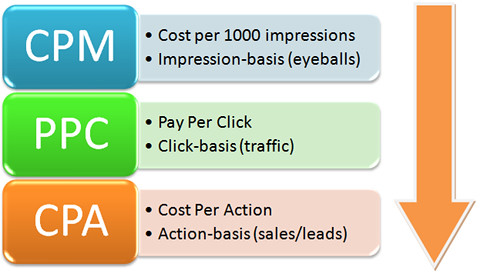
PPC advertising — short for pay-per-click — is one of the most direct ways to put your business in front of people actively searching for what you offer. Rather than waiting months for organic rankings to build, you run targeted campaigns that drive qualified visitors to your site immediately, paying only when someone clicks. Whether you’re exploring paid advertising for the first time or want to sharpen your strategy, this guide covers everything you need to know.
Businesses looking for professional help can explore Triforce’s PPC management services to see how paid advertising fits into a broader digital marketing plan.

PPC advertising works through an advertising platform where businesses create campaigns, define their targeting, set budgets, and create advertisements. When a user performs an action that matches an advertiser’s targeting criteria, the platform determines which advertisements are eligible to appear. In search advertising, this happens when someone searches for a keyword related to the advertiser’s product or service. The advertiser generally pays when the user clicks.
According to Google Ads, the platform runs an auction every time a search happens — factoring in your bid, quality score, and ad relevance — to determine which ads appear and in what order.
A basic PPC process looks like this:
PPC campaigns are highly measurable — advertisers can track impressions, clicks, conversions, spending, and other performance metrics in real time.
The term pay-per-click describes the pricing model behind many PPC advertisements. Instead of paying a fixed amount simply because an advertisement is displayed, an advertiser pays when someone clicks the ad.
For example, suppose a company spends $500 on a campaign and receives 250 clicks. Its average cost per click would be $2. But the goal of PPC is not simply to generate clicks — a successful campaign attracts relevant visitors who are likely to complete a valuable action, such as making a purchase, submitting a form, requesting a quote, or contacting the business.
PPC advertising can appear across several digital channels, giving businesses flexibility in where they meet potential customers.
Search engine advertising allows businesses to display ads when people search for specific terms. These advertisements are especially useful for targeting customers who already have a defined need or are actively researching a product or service.
Display advertising places visual advertisements on participating websites and digital properties. These campaigns work well for awareness, remarketing, and reaching audiences based on various targeting criteria.
Social media advertising uses audience characteristics and behavioral information to reach specific groups of users. Businesses can combine paid social campaigns with their broader digital marketing strategy for stronger overall reach.
E-commerce businesses can use paid shopping campaigns to promote products directly within search and shopping environments — useful for companies that need to put specific products in front of customers who are actively shopping.
A PPC campaign is a structured advertising initiative built around a specific goal. A campaign may be designed to:
Within a campaign, advertisers create different ad groups, keywords, advertisements, audiences, and landing pages. Organizing campaigns properly makes it easier to manage budgets and identify which areas are producing results.
Keywords are words or phrases that help advertisers determine when their search advertisements may be eligible to appear. For example, a digital marketing company might target keywords related to digital marketing services, SEO services, PPC management, online advertising, and local digital marketing.
The goal is not to target the largest possible number of keywords — it’s to identify search terms that are relevant to your products or services and likely to attract qualified prospects. Keyword research matters because different searches represent different levels of purchase intent. Someone searching for “what is PPC advertising” is primarily looking for information. Someone searching for “PPC management company” may be much closer to contacting a provider.
Targeting determines who can see an advertisement and under what circumstances. Depending on the advertising platform, businesses may target based on keywords, location, language, device, audience characteristics, interests, previous website interactions, demographics, and time of day.
Local businesses, for example, may limit advertisements to customers in specific cities or service areas — such as digital marketing in Dallas, Richardson, or Houston.
There is no universal cost for PPC advertising. The cost depends on factors including industry and competition level, keywords targeted, geographic targeting, ad quality and relevance, landing page experience, advertising platform, and budget and bidding strategy.
Some keywords cost relatively little per click, while highly competitive commercial searches cost significantly more. Businesses should establish a budget based on their goals rather than assuming there is one standard PPC price. A campaign with a small budget can still be effective if it’s carefully targeted and focused on high-value opportunities.
Cost per click (CPC) is the amount an advertiser pays for a click on an advertisement and one of the most commonly monitored PPC metrics. If an advertiser spends $300 and receives 150 clicks, the average CPC is $2.
However, CPC should not be viewed in isolation. A campaign with a higher CPC could be more valuable if those clicks produce more qualified leads or sales. Conversely, a campaign with a low CPC may not be successful if the traffic doesn’t convert. PPC analysis should consider both advertising costs and business outcomes together.
A conversion occurs when a user completes a desired action after interacting with an advertisement. Depending on the business, a conversion could be purchasing a product, filling out a contact form, requesting a quote, calling a business, scheduling an appointment, signing up for an account, or downloading a resource.
Tracking conversions allows businesses to determine whether their PPC investment is producing meaningful results — not just clicks.
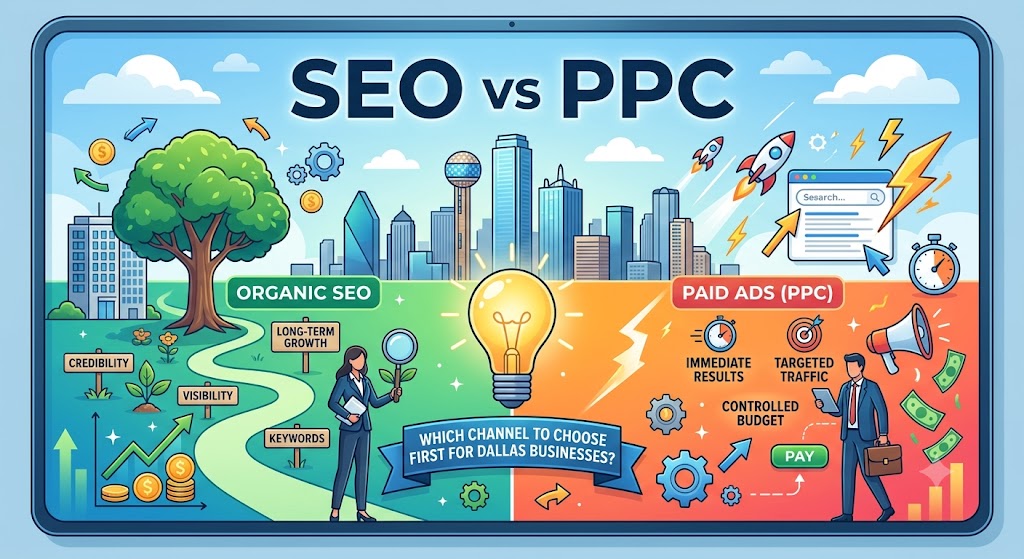
PPC and SEO can both help businesses gain visibility in search engines, but they operate very differently. PPC involves paying for advertisements that appear in designated advertising placements. SEO (search engine optimization) focuses on improving a website’s organic visibility so it earns unpaid search traffic.
PPC can provide visibility quickly after a campaign is launched, while SEO generally requires ongoing optimization and content development over time. The two strategies don’t need to compete. Businesses can use PPC for immediate paid visibility while building long-term organic performance through SEO.
Getting someone to click an advertisement is only one part of a PPC campaign. After clicking, the visitor needs to reach a page that supports the purpose of the campaign. A landing page should match the advertisement, clearly explain the offer, address the visitor’s needs, have a clear call to action, work effectively on mobile devices, and load quickly.
For example, if an advertisement promotes PPC management, sending the visitor to a relevant service page provides a better experience than a generic homepage. Landing page performance can also be improved through conversion rate optimization, which focuses on turning more visitors into customers.
Some search advertising platforms evaluate advertisements and landing pages using relevance and quality-related factors. These evaluations influence how advertisements perform and how efficiently advertising budgets are used. Relevant keywords, useful advertisements, strong landing pages, and a positive user experience all contribute to better campaign performance.
Businesses should monitor multiple metrics when evaluating PPC performance — these should be considered together, not individually.
How many times an advertisement was displayed.
How many times users interacted with an advertisement.
The percentage of impressions that resulted in clicks.
The average amount paid for each click.
The percentage of users who complete a desired conversion.
How much advertising spend is associated with generating each conversion.
Compares advertising revenue with advertising costs when revenue tracking is available.
PPC helps businesses gain visibility in advertising placements without waiting for organic rankings to develop.
Advertisers can target specific keywords, locations, audiences, and other criteria to reach the right people.
PPC platforms provide extensive campaign data that can be used to evaluate performance and optimize spend.
Businesses can establish campaign budgets and adjust spending based on actual results.
Advertisers can test different headlines, offers, keywords, landing pages, and audiences to see what resonates.
Campaigns can be adjusted as business priorities change — without a long lead time.
Unlike organic traffic, paid traffic requires continued advertising spending. When campaigns stop, the paid visibility stops with them.
Businesses in competitive markets may face higher costs for valuable keywords.
If campaigns target irrelevant searches or audiences, businesses pay for clicks that are unlikely to produce results.
PPC campaigns need monitoring, testing, optimization, and analysis to stay effective.
A click is just the beginning. Converting that visitor into a customer depends on the website, landing page, and offer.
A successful PPC campaign starts with clear goals and a disciplined process. Define the business objective, research the target audience, conduct keyword research, organize campaigns logically, write relevant advertisements, create relevant landing pages, establish conversion tracking, monitor performance regularly, and optimize continuously. PPC is rarely a “set it and forget it” strategy.
PPC works best when it’s connected to other parts of a company’s digital presence. Paid advertising can bring visitors to a website, while SEO services generate organic visibility. Content marketing educates potential customers, and email marketing nurtures leads. Combining these activities through a broader digital marketing services approach is more effective than treating each channel as completely separate.
Local businesses can use PPC to target customers in specific geographic areas. Location targeting helps reduce wasted advertising spend by focusing campaigns on areas where the business can actually serve customers. PPC can also complement local SEO services by giving businesses another way to reach customers searching for local products and services.
PPC works best when every part of the campaign is connected to a clear business objective. Rather than focusing only on clicks, businesses should focus on attracting the right visitors, providing a relevant experience, and turning those visits into meaningful actions.
With thoughtful targeting, accurate tracking, and continuous optimization, PPC can become a measurable and valuable component of your overall digital marketing strategy. Ready to get started? Schedule a free consultation with our PPC agency in Dallas and let’s build a paid advertising strategy that drives real results.
Hiring a PPC management agency is a significant step for any business serious about growing

Most Dallas businesses running Meta ads are burning budget on the wrong audience. Here’s what
SEO builds authority over time. PPC puts you in front of buyers today. Here’s how