Cart 0


SEO vs. PPC: Which Digital Marketing Strategy Is Better?
If you’re deciding where to put your marketing budget, the SEO vs. PPC question comes



Are you a small business owner in Dallas, across Texas, or anywhere in the US, feeling like you’re constantly battling for online visibility? Do you often think, “I don’t have the time to learn all this SEO stuff” or “It feels like a black box, I don’t know where to start”? Many small business owners share your frustration, especially when your website isn’t showing up when people search for your services near them. You might be spending money on ads, but it’s not sustainable, and you know there’s a better way to get found online. This guide to SEO for small business will demystify the process, offering clear, actionable advice to help you attract more local customers and achieve sustainable growth without feeling overwhelmed.
In today’s digital landscape, having a website is just the first step. If potential customers can’t find you when they’re searching online for products or services you offer, you’re essentially invisible. This is where Search Engine Optimization (SEO) comes in. For small businesses and nonprofits, SEO isn’t just a marketing tactic; it’s a fundamental necessity for survival and growth. Many business owners tell us, “I just need more customers, and I know they’re searching online.” SEO is the bridge that connects those searching customers directly to your business.
Think about it: when you need a new restaurant, a plumber, or a boutique, what’s the first thing you do? You Google it. Your customers are doing the same. If your business isn’t appearing prominently in those search results, you’re missing out on vital website traffic and valuable leads. While paid advertising (like Google Ads campaigns) can provide immediate boosts, a robust SEO strategy offers sustainable, long-term returns on investment (ROI) by consistently driving organic traffic to your site. It’s about building a digital presence that works for you 24/7, ensuring you’re getting found online by the right people at the right time. For small-to-medium businesses and nonprofits, especially those rooted in communities like Dallas, TX, establishing this online visibility is paramount to competing effectively with larger entities that might have bigger marketing budgets.
For many, SEO seems like a complex, ever-changing beast. But at its core, SEO for small business can be broken down into a few key areas. Focusing on these pillars will help you understand where to put your efforts to achieve better search results and attract more local customers.
Before you can rank higher, you need to know what your target audience is actually searching for. This is where keyword research comes in. It’s about identifying the specific words and phrases (keywords) that potential customers use when looking for your products or services. For a Dallas-based bakery, this might include “best cupcakes in Dallas,” “custom cakes near me,” or “gluten-free pastries Dallas.” Don’t just guess; use tools to find relevant, low-competition keywords that have decent search volume. Understanding your audience’s vocabulary is crucial here.
Once you have your keywords, you need to integrate them naturally into your website’s content. On-page SEO involves optimizing individual web pages to rank higher and earn more relevant traffic in search engines. This includes:
Technical SEO ensures that search engines can easily crawl, index, and understand your website. It’s the foundation upon which all other SEO efforts are built. Key aspects include:
Off-page SEO refers to activities done outside of your website to improve its ranking. The most significant factor here is backlinks – links from other reputable websites to yours. Backlinks act as “votes of confidence” from other sites, signaling to search engines that your content is valuable and trustworthy. Strategies include:
For small businesses, especially those with a physical location or serving a specific geographic area like Dallas, TX, mastering local SEO is absolutely critical. It’s what helps you get found online by people searching for your services “near me.” If you’re not showing up in the local pack or local search results, you’re missing out on a huge segment of your potential clientele.
Your Google Business Profile (formerly Google My Business or GMB) is the cornerstone of local SEO. This free tool allows you to manage how your business appears on Google Search and Maps. To maximize its impact:
For a detailed guide, check out our Google Business Profile optimization checklist.
NAP (Name, Address, Phone number) consistency across all online platforms is vital. Inaccurate or inconsistent information can confuse search engines and potential customers, harming your local search ranking. Ensure your NAP is identical on your website, GBP, social media profiles, and all online directories (local citations).
Beyond GBP, list your business on other relevant online directories like Yelp, Facebook, TripAdvisor, and industry-specific sites. These local citations reinforce your business’s presence and authority in your local community. The more consistent and numerous your citations, the better your chances of ranking higher for local searches.
Create content that specifically references your service areas or local landmarks. For instance, a Dallas-based plumber might write a blog post about “Common Plumbing Issues in North Dallas Homes” or “Emergency Plumbers Serving the Dallas-Fort Worth Metroplex.” This type of content signals to search engines that your business is highly relevant to local search queries. At Triforce Digital Marketing, we specialize in Local SEO services designed to help businesses connect directly with their nearby customers.
Feeling like you’re trying to do it yourself, but not seeing results? Here’s a quick, actionable checklist to kickstart your SEO for small business efforts:
Implementing this SEO checklist for small business is an ongoing process, but consistent effort will yield significant improvements in your online visibility. If you find yourself needing more comprehensive support, our expert team offers robust SEO services tailored for small-to-medium businesses.
Many SEO strategies focus heavily on technical aspects, keywords, and backlinks. While these are undeniably important, what many competitors miss, and what can truly set your small business apart, is the power of authentic local storytelling. This unique angle emphasizes building a genuine connection with your community online, transcending mere search engine algorithms to create real customer loyalty.
Think about it: people don’t just search for a service; they search for a solution, a trusted provider, a community staple. By weaving your business’s unique narrative, local history, community involvement, and customer experiences into your online presence, you create content that resonates deeply. This isn’t just about keywords; it’s about building trust and authenticity. For example:
This approach to content development not only improves your search engine rankings by providing rich, unique, and highly relevant content, but it also fosters a stronger emotional connection with your local audience. It’s about building a genuine digital presence that reflects the heart of your business and its place within the community. When you tell your story authentically, you don’t just get found online; you build a loyal following.
You might be asking, “Is SEO worth it for small businesses?” or “How much does SEO cost for a small business?” The answer to the first is an emphatic yes. The answer to the second varies, but the ROI almost always outweighs the expense when done correctly. While this guide provides a solid foundation, the reality for many small business owners is that they are already stretched thin. “I’m spending money on ads, but it’s not sustainable,” and “How do I compete with bigger companies that have huge marketing budgets?” are common sentiments we hear.
That’s where a trusted digital marketing partner like Triforce Digital Marketing comes in. Based in Dallas, TX, we understand the unique challenges and opportunities faced by small-to-medium businesses and nonprofits across the US. We’re a Google Partner with a 4.9-star Google rating, backed by a team of 20+ professionals dedicated to data-driven strategies.
Hiring an expert means:
Whether you need help with comprehensive SEO services, targeted Local SEO services, or strategic content development to tell your unique story, Triforce Digital is here to help. We believe in transparency, data-driven decisions, and delivering measurable results that help your business thrive online.
Small businesses can significantly improve local search ranking by optimizing their Google Business Profile, ensuring consistent NAP information across all online directories, gathering positive customer reviews, and creating geo-targeted content that mentions their specific service areas and local landmarks.
For small businesses, the most important SEO factors include thorough keyword research, strong on-page optimization (titles, content, headers), technical SEO (website speed, mobile-friendliness), building quality backlinks, and especially optimizing their Google Business Profile for local searches.
Yes, SEO is absolutely worth it for small businesses. It provides sustainable online visibility, attracts highly qualified organic traffic, increases brand credibility, and offers a strong return on investment by connecting businesses with customers actively searching for their products or services online.
The cost of SEO for a small business can vary widely depending on the scope of services, the competitiveness of the industry, and the chosen provider. It can range from a few hundred dollars for basic local SEO to several thousand for comprehensive national strategies, but it’s an investment that typically pays for itself through increased leads and sales.
Don’t let competitors get ahead. Triforce Digital is Dallas’s trusted, data-driven digital marketing agency — and we’re ready to help grow your business online. Schedule your free consultation today.
If you’re deciding where to put your marketing budget, the SEO vs. PPC question comes
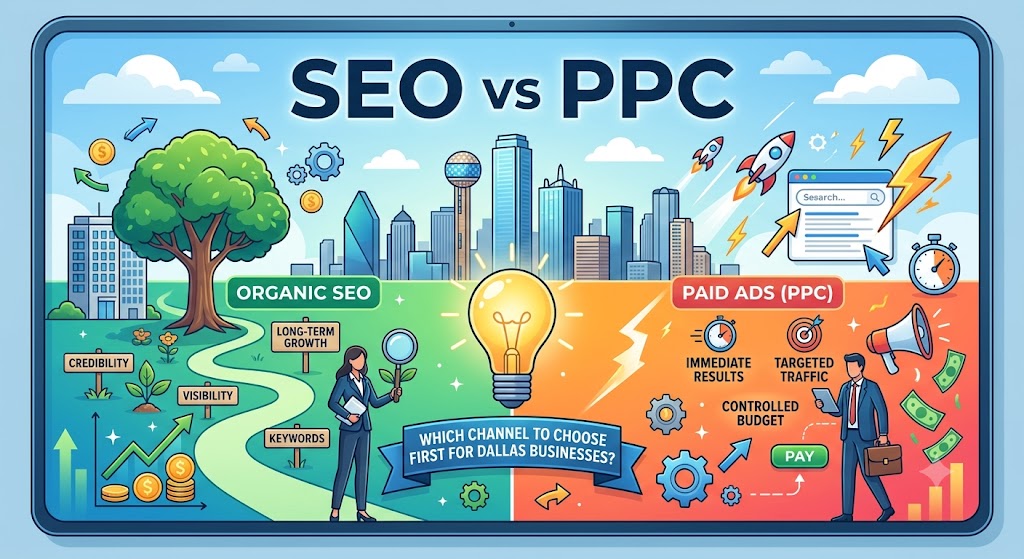
SEO builds authority over time. PPC puts you in front of buyers today. Here’s how

Ask most SEOs what Ahrefs is for, and they’ll say keywords. They’ll describe the keyword
Please Check Your Inbox to Download the Resource!