Cart 0


How SEO and PPC Work Together
SEO and PPC work together by combining organic search visibility with paid advertising to help
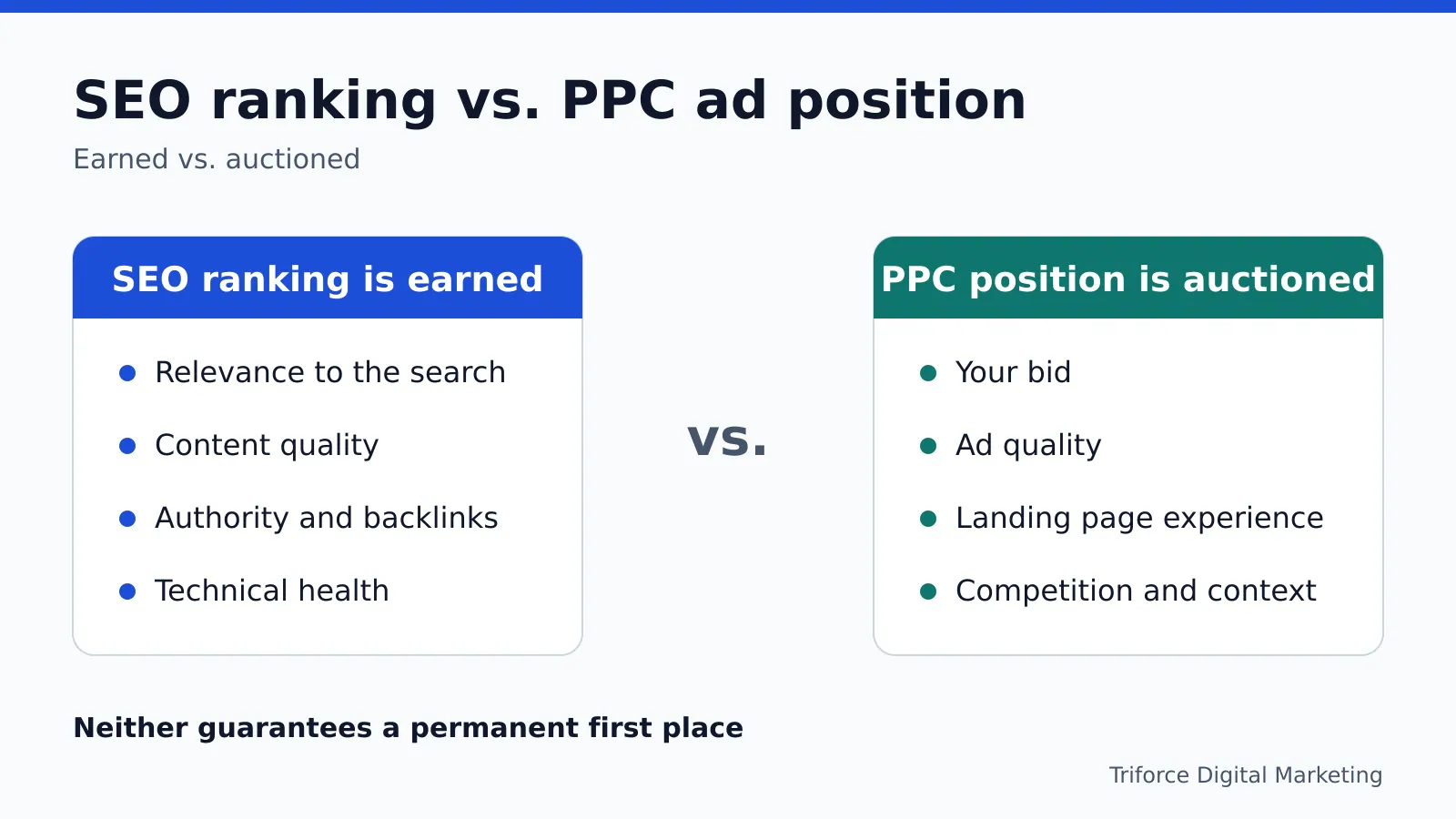
Ranking works differently when comparing PPC vs. SEO because the two strategies use different methods to determine where websites appear in search engine results. SEO rankings are earned organically through relevance, content quality, website authority, and technical optimization, while PPC ad positions are determined through an advertising auction that considers bids, ad quality, competition, and other factors. SEO focuses on building long-term organic visibility, whereas PPC provides paid placement opportunities that can generate visibility much faster.
Understanding these differences helps businesses decide how to allocate their marketing budgets, improve search visibility, and attract potential customers. Although SEO and PPC compete for attention on the same search results pages, they offer different opportunities for reaching an audience.
SEO ranking refers to the position a website earns in the unpaid, organic search results displayed by search engines such as Google and Bing.
When someone searches for a product, service, or question, search engines evaluate numerous signals to determine which pages are most relevant and useful for that query.
Websites that demonstrate strong relevance, helpful content, credibility, and technical accessibility have opportunities to rank higher in organic search results.
For example, a Dallas-based digital marketing agency targeting the keyword “SEO services in Dallas” may appear among the organic search results if its service page is relevant, useful, and competitive.
SEO rankings are not purchased directly. Businesses improve their chances of ranking through ongoing optimization activities, including:
SEO rankings generally take time to develop. A newly optimized page may not immediately appear on the first page of Google, especially when competing against established websites.
Businesses can learn more about improving their organic visibility through Triforce’s search engine optimization services.
PPC ranking refers to the placement of paid advertisements within search engine advertising spaces.
Unlike organic SEO rankings, PPC placements are influenced by an advertising auction. Advertisers compete for opportunities to display their advertisements when users search for relevant keywords.
Google Ads is one of the most commonly used platforms for PPC advertising.
For example, a plumbing company targeting “emergency plumber in Dallas” can create a paid search campaign to display its advertisement when someone searches for that service.
However, simply offering the highest bid does not guarantee the top advertising position.
Google Ads uses Ad Rank to determine whether an advertisement is eligible to appear and where it may be positioned relative to other advertisements.
Factors that can influence Ad Rank include:
PPC advertisers can adjust their bids, targeting, advertisements, and landing pages to improve campaign performance.
Unlike SEO, PPC can generate search visibility shortly after a campaign becomes eligible and begins serving. However, advertisements generally stop appearing when campaigns are paused, budgets are exhausted, or ads become ineligible.
To understand the fundamentals, explore Triforce’s guide to what PPC advertising is and how it works.
Although both strategies help businesses appear in search results, their ranking systems operate differently.
The following comparison highlights the main differences.
| Ranking Factor | SEO | PPC |
|---|---|---|
| Search placement | Organic search results | Sponsored advertising placements |
| Ranking method | Organic search ranking systems | Advertising auction and Ad Rank |
| Payment | No payment for individual organic clicks | Advertisers generally pay per click in CPC campaigns |
| Positioning factors | Relevance, content quality, links, technical factors, and other signals | Bid, ad quality, auction competition, context, and ad assets |
| Time to visibility | Usually takes time to develop | Can begin shortly after campaign launch |
| Position stability | Can fluctuate as search results and competitors change | Can change with bids, budgets, eligibility, and auction conditions |
| Long-term visibility | Can continue generating traffic without paying for each click | Requires an active and eligible advertising campaign |
| Optimization | Content, technical improvements, and authority development | Bidding, ad copy, targeting, and landing page improvements |
The most important distinction is that SEO earns organic visibility, while PPC purchases advertising opportunities through an auction.
Neither approach guarantees a permanent first-place position.
Google uses automated ranking systems to evaluate pages and determine which results are most helpful for a particular search.
There is no single SEO ranking factor that guarantees a website will appear at the top of the search results. Instead, search engines consider multiple signals and systems when determining organic visibility.
Here are some important elements that influence SEO performance.
Search engines aim to provide results that closely match what users are looking for.
A page targeting “best digital marketing agency in Dallas” should provide information relevant to someone comparing digital marketing providers.
If the page contains unrelated information or does not address the user’s needs, it may struggle to compete for the keyword.
Businesses should develop content that answers customer questions, explains services, and provides useful information.
This includes:
A well-planned content marketing strategy can help businesses build relevant resources that support their organic search visibility.
Backlinks are links from other websites that point to your website.
Relevant, trustworthy backlinks can help search engines understand a website’s credibility and authority.
For example, a Dallas marketing agency that receives relevant links from industry publications, business directories, and reputable websites may strengthen its overall backlink profile.
However, not all backlinks provide equal value. Search engines evaluate links within broader systems, and acquiring large numbers of low-quality links does not guarantee improved rankings.
Businesses should focus on earning relevant links through:
Technical SEO helps search engines access, crawl, understand, and index website content.
Even useful content can struggle to perform organically if important technical problems prevent search engines from properly processing the website.
Common technical SEO considerations include:
Regular technical audits help identify issues that may affect organic search performance.
Businesses can also explore Triforce’s web development services to address website-related improvements.
A website should make it easy for visitors to find information and complete their intended actions.
Clear navigation, readable content, mobile-friendly layouts, and accessible design all contribute to a better experience.
While user experience should not be reduced to a single ranking factor, a useful and accessible website helps visitors interact with content more effectively.
Businesses should regularly evaluate their website structure, usability, and conversion paths.
PPC advertising positions are determined through an auction that takes place when a user performs a search that may trigger eligible advertisements.
Google Ads evaluates several factors to determine Ad Rank and advertising eligibility.
A maximum bid represents the highest amount an advertiser is willing to pay for a click or other bidding action, depending on the selected bidding strategy.
For example, two businesses may target the same keyword but use different maximum CPC bids.
Business A has a higher bid, but this does not automatically mean its advertisement will receive the higher position.
Ad quality and other auction factors also matter.
Google evaluates the relevance and expected performance of advertisements.
For search campaigns, important considerations include expected click-through rate, ad relevance, and landing page experience.
An advertisement should clearly match the search query and provide information that users expect to find.
For example, someone searching for “PPC management services in Dallas” should see an advertisement that directly addresses PPC management rather than a generic advertisement promoting unrelated marketing services.
The destination page plays an important role in the overall advertising experience.
A relevant landing page should provide useful information, load properly, and make it easy for visitors to take action.
For example, an advertisement promoting SEO services should direct visitors to a page explaining the company’s SEO solutions, process, and benefits.
A confusing or irrelevant landing page can negatively affect the advertising experience and campaign performance.
PPC advertising positions can change depending on the advertisers participating in a particular auction.
Competition, search context, device, location, and other factors can influence the auction outcome.
This means a business may achieve a different advertising position for the same keyword depending on when and where someone performs the search.
PPC rankings are therefore dynamic rather than fixed.
One of the biggest differences between SEO and PPC is how quickly their positions can change.
Organic rankings may fluctuate as search engines reassess pages, competitors publish new content, websites gain or lose authority, and search results evolve.
PPC positions can change much more quickly because they depend on advertising auctions and campaign conditions.
Consider the following examples.
SEO Ranking Example:
A business publishes an optimized service page targeting “web design company in Dallas.”
Initially, the page may appear on page three of Google. After improving its content, earning relevant backlinks, and addressing technical issues, it may gradually move closer to the first page.
These improvements can support long-term organic visibility, although ranking outcomes are never guaranteed.
PPC Ranking Example:
The same business launches a Google Ads campaign targeting “web design company in Dallas.”
Its advertisement may become eligible to appear in sponsored search results shortly after the campaign launches.
However, its position may change depending on competitors’ bids, ad quality, budget, and auction conditions.
This demonstrates why PPC is useful for faster exposure, while SEO is valuable for developing long-term organic search performance.
Yes. A business can appear in both paid and organic search results for the same keyword.
For example, a company targeting “SEO services in Dallas” may have:
This creates multiple opportunities for potential customers to discover the business.
Appearing in both paid and organic listings can provide several benefits:
However, having both listings does not guarantee that users will click both results or that overall conversions will increase proportionally.
Businesses should monitor the combined performance of paid and organic search to determine whether the additional visibility justifies the investment.
For a deeper understanding of how these channels complement each other, read How SEO and PPC Work Together for Better Results.
PPC generally provides faster opportunities for search visibility because advertisements can begin appearing once campaigns are approved, eligible, and participating in auctions.
SEO usually requires more time because websites must compete for organic rankings through relevance, content quality, authority, and technical performance.
However, faster visibility does not necessarily mean better long-term value.
Consider these differences:
For businesses that need immediate exposure, PPC may be a suitable starting point. For companies focused on sustainable organic visibility, SEO should be part of their long-term marketing strategy.
Rather than choosing only one strategy, businesses can coordinate SEO and PPC to create a stronger search marketing approach.
Here are practical ways to combine them.
PPC campaigns can provide actual performance data about the search terms that attract clicks and generate conversions.
Businesses can use these insights to identify valuable keywords for organic optimization.
For example, if a PPC campaign reveals that “local SEO services in Dallas” generates qualified leads, the business can prioritize that keyword when improving its organic service page.
This helps connect advertising performance with SEO keyword research.
SEO content can provide useful information for developing relevant PPC landing pages.
Businesses can use existing service pages and blog content to understand customer questions, identify relevant topics, and improve the information presented in advertisements.
The goal is to ensure that advertisements and destination pages match what potential customers are searching for.
Some keywords are difficult to rank for organically, particularly in competitive industries.
PPC can help businesses gain visibility for these searches while their SEO strategies continue developing.
For example, a new digital marketing company may not immediately rank for “digital marketing agency Dallas.”
It can use paid advertising to target the keyword while developing its website authority and organic content.
Both SEO and PPC can benefit from landing pages that clearly communicate the value of a business’s products or services.
Businesses should improve page structure, calls to action, content relevance, mobile usability, and contact forms.
Conversion rate optimization can help identify opportunities to turn more website visitors into leads or customers.
SEO and PPC should have separate performance reports because their ranking systems and costs differ.
For SEO, monitor:
For PPC, monitor:
Reviewing both sets of metrics helps businesses understand which channels generate the most valuable results.
The right strategy depends on your business objectives, available budget, competition, and expected timeline.
SEO may be a better priority for businesses that want to establish organic visibility, develop long-term traffic opportunities, and build authority in their industry.
PPC may be more appropriate for businesses that need immediate exposure, want to promote specific services, or need to reach customers searching for high-intent keywords.
For many businesses, combining both strategies provides a more balanced approach.
A local service company, for example, can use PPC to generate leads while developing location-specific service pages and improving its Google Business Profile through local SEO services.
Businesses can also review Triforce’s digital marketing services to understand how different marketing channels can support their growth objectives.
SEO and PPC use different ranking systems: SEO earns organic positions through ongoing optimization, while PPC competes for paid placements through advertising auctions. Both can help businesses reach potential customers, but their costs, timelines, and long-term benefits differ.
The most effective approach is to choose the strategy that aligns with your goals and use performance data to guide ongoing improvements.
If you want to strengthen your organic rankings or improve paid search performance, contact Triforce to explore a digital marketing strategy built around your business objectives.
We will look at your market and show you where paid and organic search can each earn their keep. Book a Free Strategy Session with Triforce and talk through your next step.
SEO and PPC work together by combining organic search visibility with paid advertising to help
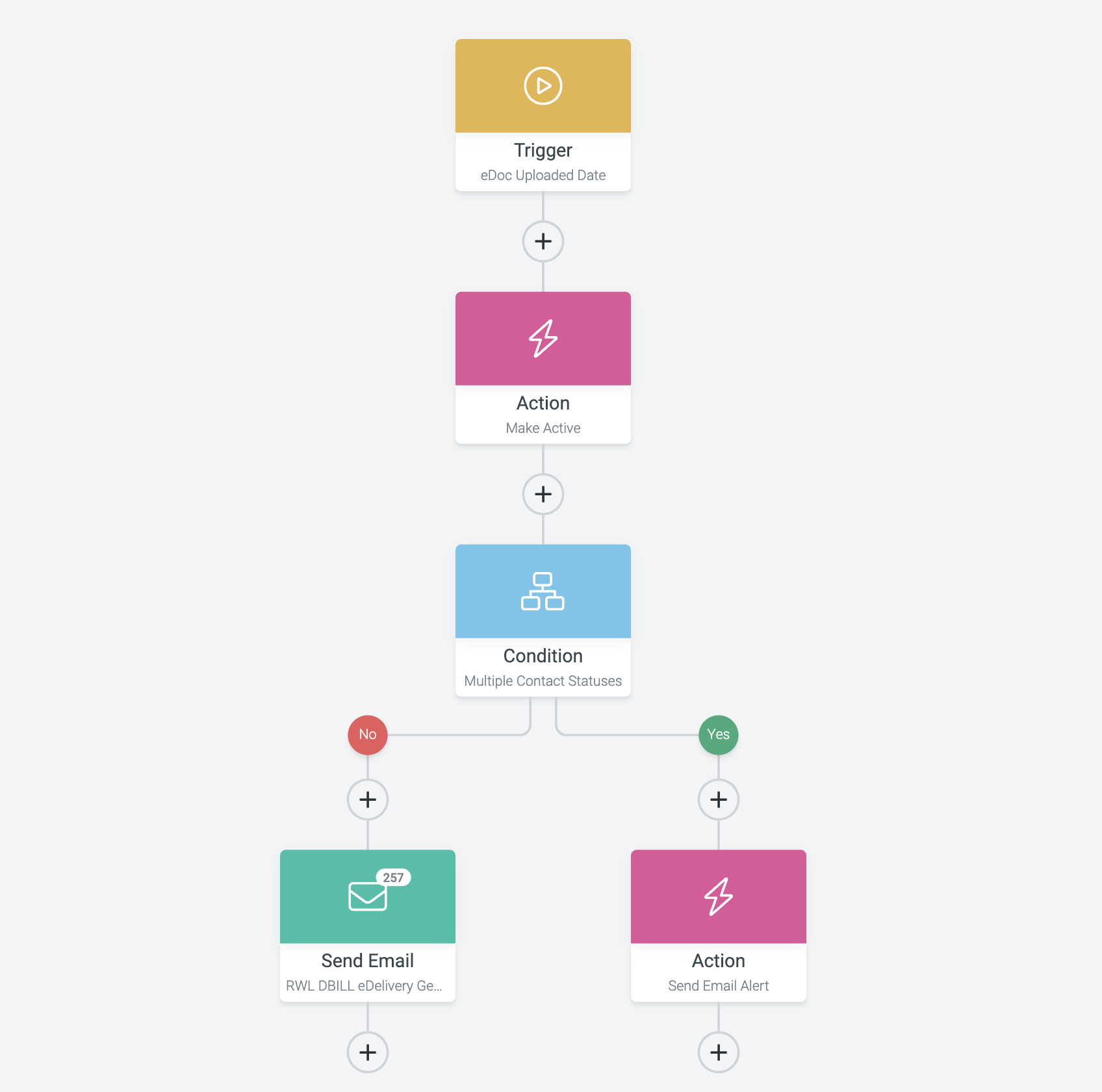
Workflow automation replaces repetitive manual steps with software-driven triggers and actions. Here is how it

CRM integration connects your customer relationship management system with other business tools so data flows